How to learn pattern cutting by studying the clothes you already wear
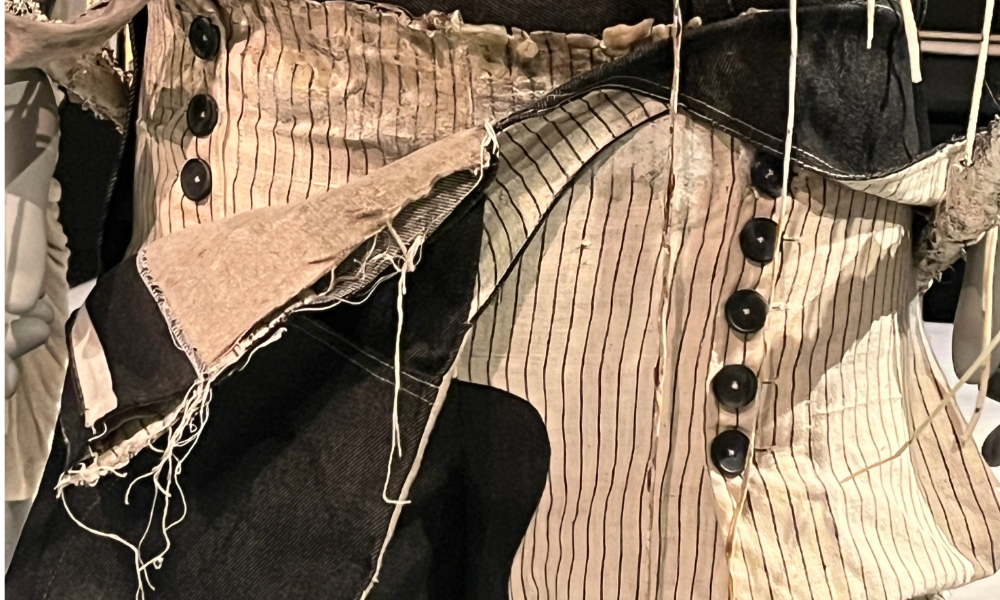
When I teach students about fashion, one thing I try to get across early is this:
you already have more information than you think.
Your wardrobe is full of it.
So are the shops. So is the street.
Every garment you wear is made up of sections that join together. Those sections are patterns.
The joins are seams.
Nothing appears by accident.
Most students don’t pay enough attention to the clothes they’re already wearing — where the seams are placed, why a pocket sits exactly there, why a jacket hangs the way it does. They see the garment as one thing, rather than a construction made up of decisions.
I only really understood this later in my degree, after being sent to do “shop analysis” by our tutor. I honestly thought it was a complete waste of time — until something clicked. I picked up a beautifully tailored jacket that had embroidery on the back panel of the lining.
I stopped looking at clothes and started looking into them.
Not just the outside — but the inside.
The seam finishes.
The fabric choices.
The weight, the balance, the textures, the colours, the logic.
Fashion is a hand craft. It begs to be touched.
That’s how it wants to be learned.
And yet we’re increasingly asked to experience clothing at a distance — through screens, images, exhibitions, and glass cases. You can look, but you can’t touch. You can’t turn a garment inside out. You can’t trace a seam with your fingers.
So here’s my question to you, as a designer — or someone who wants to become one:
When was the last time you really looked at the clothes you’re wearing?
Look at the jeans you have on right now. Do you notice a different seam construction on the inner leg versus the outer?
Study the construction of the pocket on your jacket.
Notice where the seams sit on the body — and why.
Is there stretch in the garment, and which direction does it run?
Can you see the pattern shape of the sleeve on your shirt — and how does it compare to another style?
Do this everywhere — on public transport, in shops, on people walking past you.
Because looking at clothes online is not enough.
Fashion is a craft.
And like all crafts, it’s learned by seeing, touching, and paying attention.
What will you discover?